Turn subjective judgement into objective, auditable scores.
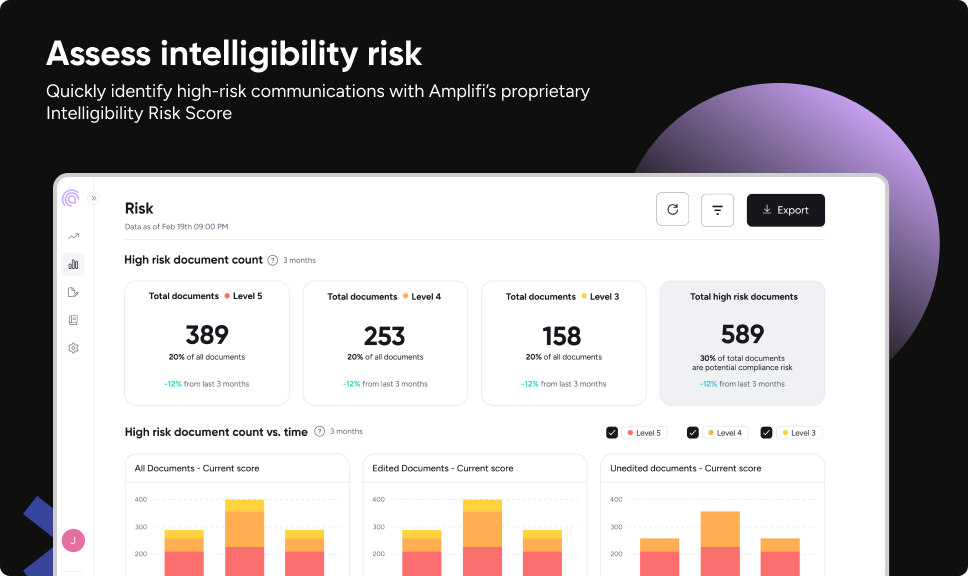
Amplifi's Cognitive Risk Engine scores every document instantly. It assesses the likely understanding of all communications by moving beyond surface-level readability metrics to evaluate the deeper intelligibility of a document.
Know exactly how intelligible your communications are, and prove it to regulators.
.svg)


Surface Clarity Is No Longer Enough.
The CMA’s Draft Guidance on Unfair Contract Terms explicitly states that “legibility and clarity of language are not enough to ensure compliance”. Terms must be structured so consumers can assess how a contract operates in practice.
Standard readability metrics cannot detect whether a £12 missed payment fee is structurally disconnected from credit reference reporting or court enforcement steps. Amplifi’s Structural Risk Diagnostics evaluate both paragraph-level coherence and document-level progression.

Defend contract terms against judicial fairness reviews by proving both linguistic and structural transparency.

Stop losing customers at pre-contract click-throughs by resolving cognitive fatigue and unhelpful forward-reference chains.

Verifies that wording is intelligible to average and vulnerable consumers alike, satisfying CMA draft guidance para 4.35–4.36.
A Score That Measures Genuine Comprehension Risk
Intelligibility is the ability of consumers to be able to read, understand and use the information to inform their actions, and to understand and foresee their risks, rights and costs. In short, information must be genuinely understandable to the people it is meant to serve.
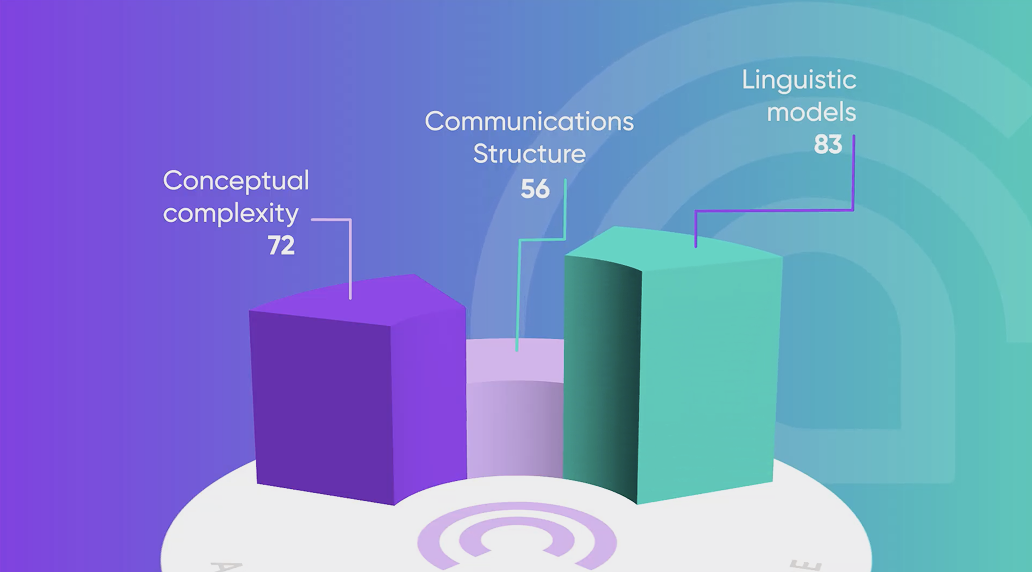

Assesses conceptual complexity, ambiguity and language clarity - the factors that actually prevent understanding, not just surface metrics.
.png)
Scores content against the comprehension levels of different reader groups, including vulnerable consumers and those with lower literacy levels.
.png)
Built with FCA support, tested with the SRA, and grounded in 50+ years of research. The science is what makes the score defensible.
Readability Scores Are Not Enough
Readability (in practice usually taking just sentence length and word length as a measure) has been shown to be a poor predictor of understanding outcomes in a number of studies. The FCA has signalled that they won’t trust standard readability scores as a proxy for understanding:
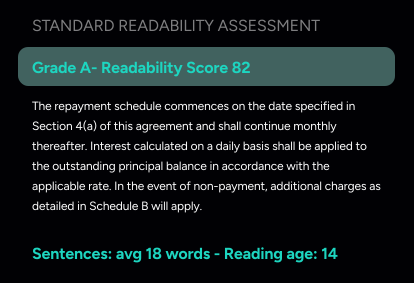
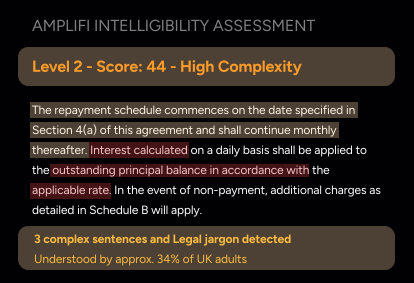

"Borrowers often struggle to understand complex legal and financial documents, leading to poor financial decisions and confusion.
Readability scores alone usually overlook complexity and a user's comprehension…”
The Financial Conduct Authority
.png)
Continuous, Embedded Testing at Scale
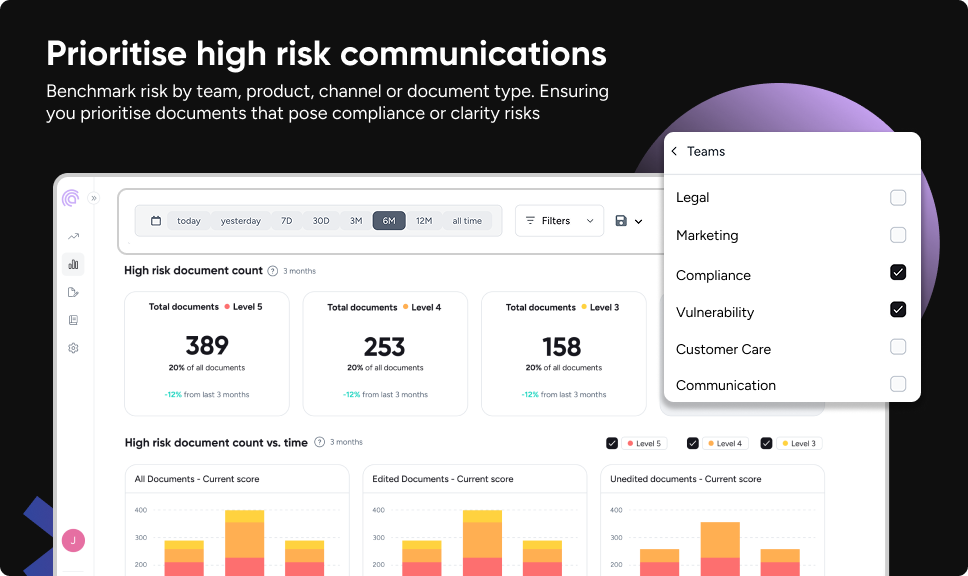
Benchmark and Reduce Risk
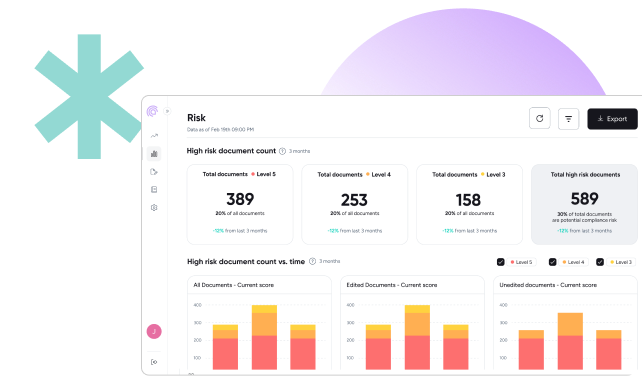
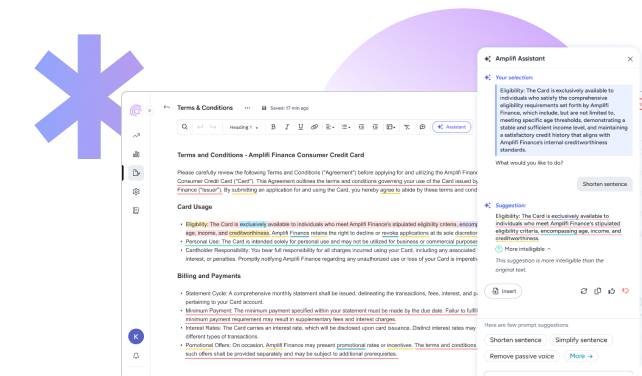
Improve Critical Communications
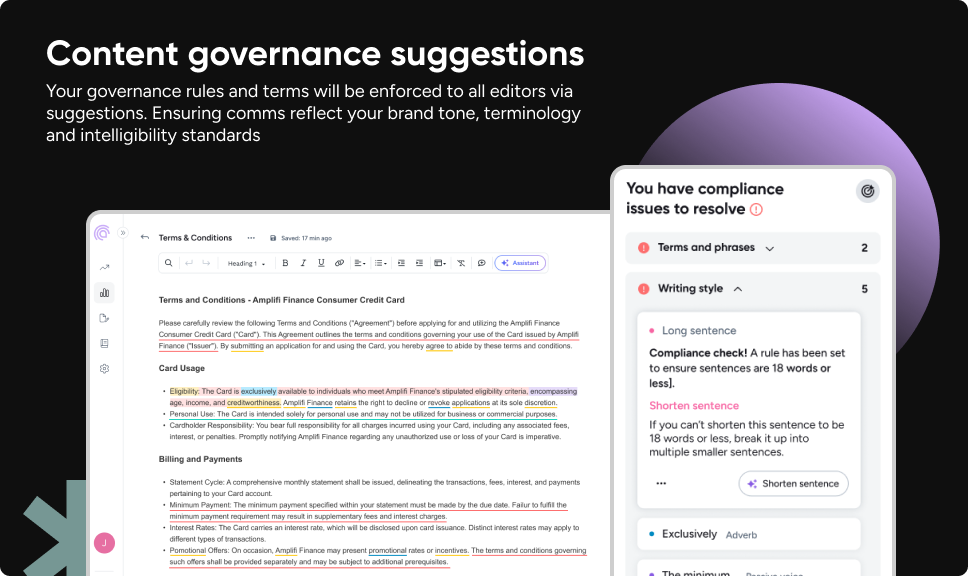
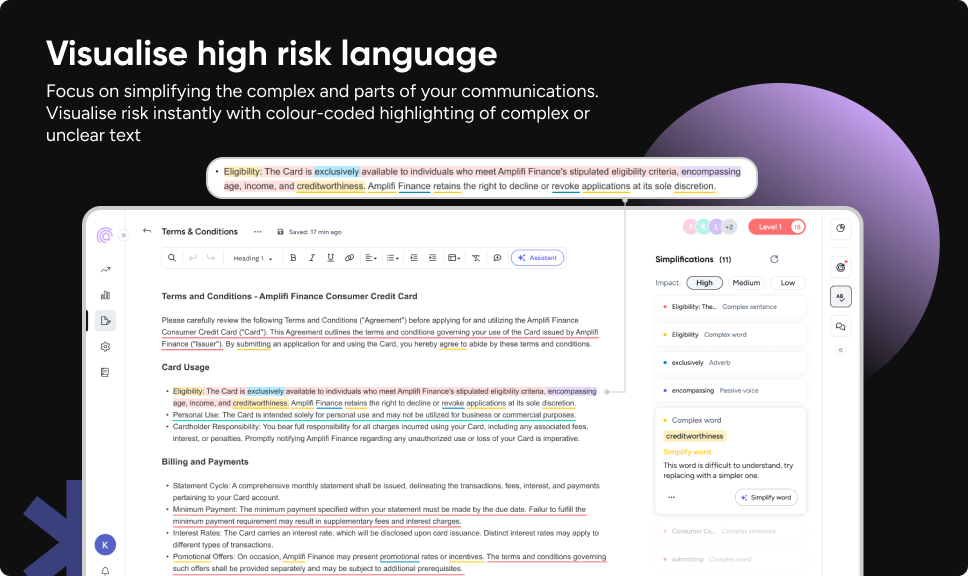
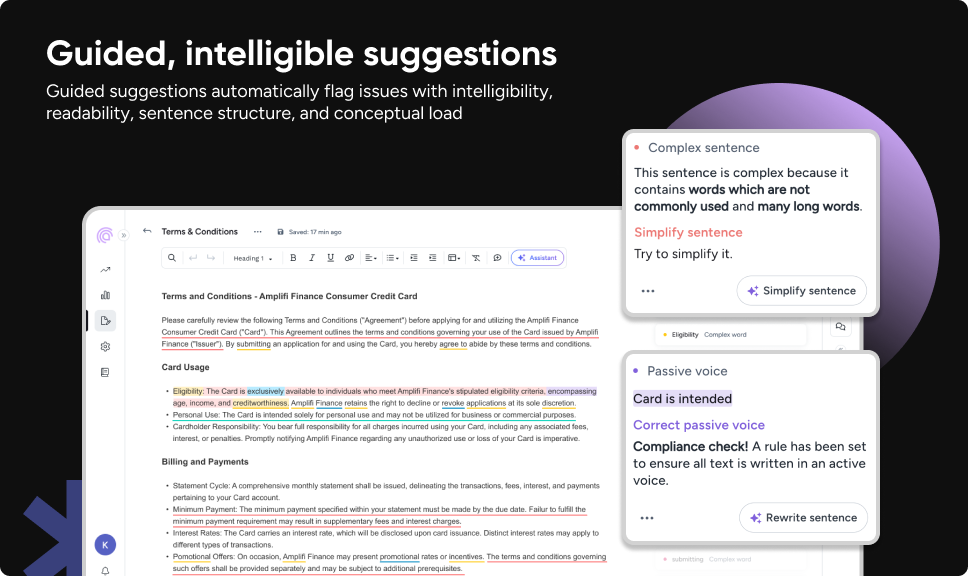
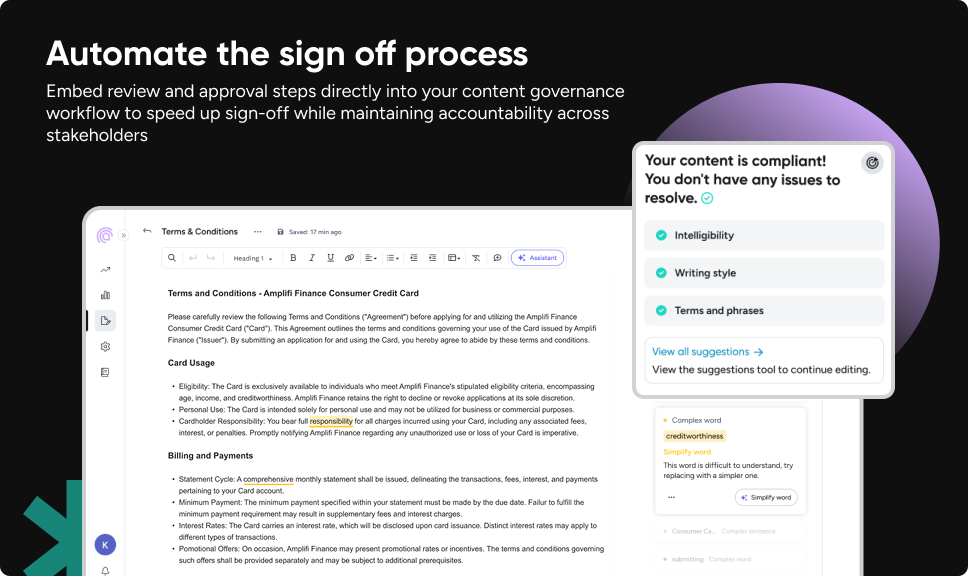
A heat-map view highlights problem areas directly within the document, making it clear where to focus and in what order.
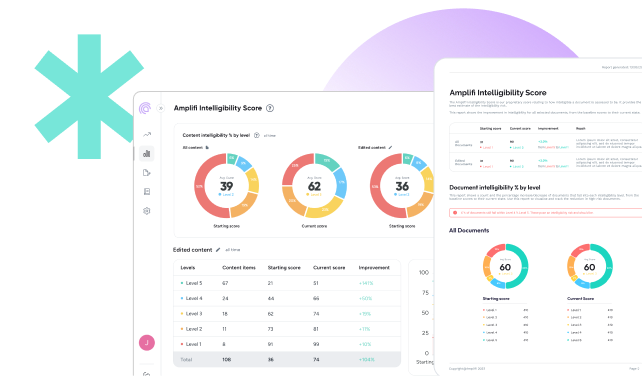
Insights That Build Trust
Powered by our Cognitive Risk Engine™
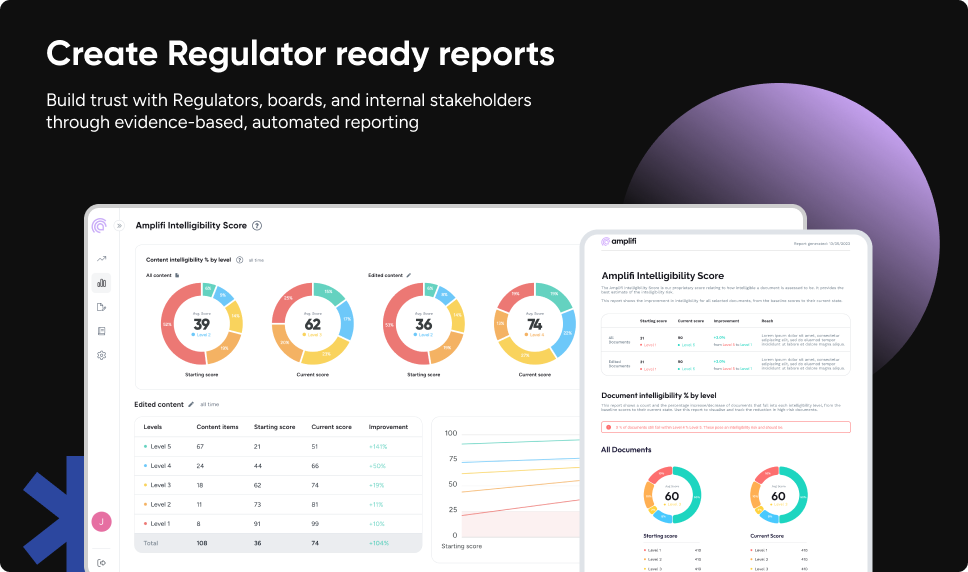
The score measures how intelligible a communication is likely to be for a given reader group, going beyond standard readability metrics to assess conceptual complexity, ambiguity, and genuine comprehension risk.
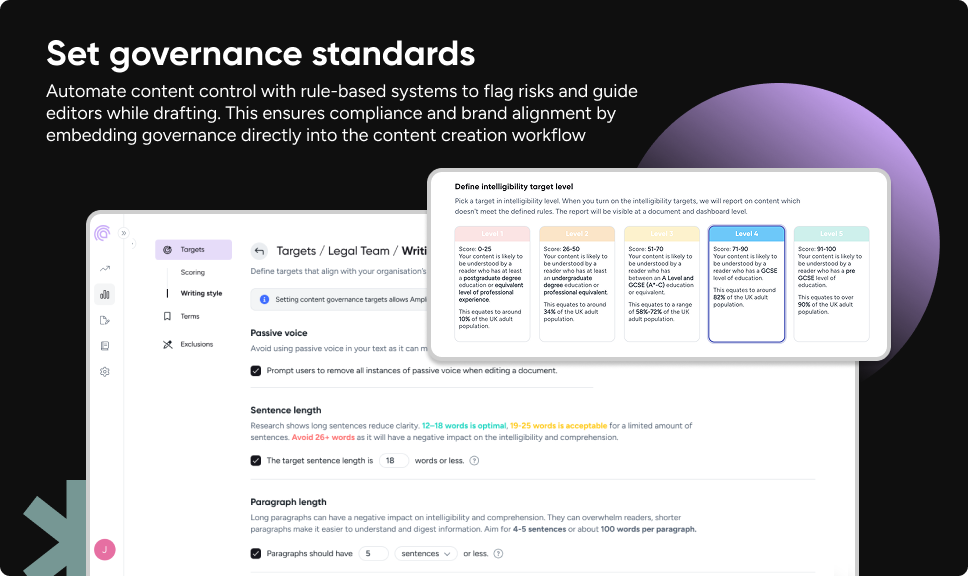
It is expressed as a single, consistent score from 0 to 100, mapped to a five-level intelligibility scale, where Level 1 represents the highest risk and Level 5 represents the lowest.
The Only True Measure of Intelligibility


Collaborating to pioneer transformational AI in Financial Services and beyond



.png)






.svg)

How Amplifi Fits Into Your Workflow

.png)
.png)
Integrate Amplifi with the apps you already use
.png)
.svg)
.png)