Why the FCA’s use of the Amplifi Multi-Level Comprehension Framework marks a turning point for Consumer Understanding



For years, financial services firms have wrestled with a deceptively simple question: do customers really understand what we’re telling them? Both our own Amplified research with leading academics, and the FCA’s own work suggests that the answer has too often been “not really, no”. We know that traditional readability checks and standard comprehension testing just aren’t enough to fix the problem.
That’s why we believe the FCA’s recent use of Amplified Global’s Multi-level Comprehension Framework is such a significant moment. It signals a shift away from compliance box-ticking and towards a more honest, evidence-based view of how consumers actually process financial information. And for firms facing the ongoing demands of the Consumer Duty, this shift could be a very big deal.
What is the Amplifi Multi-level Comprehension Framework?
The Amplifi framework is a flexible framework for assessing comprehension as a dynamic process, rather than a single outcome. It uses different layers to recognise that understanding occurs at different depths depending on what the reader needs to do with the information. By considering the purpose of the communication, the relevant levels of understanding can be targeted, and tested.
Instead of asking whether a document is clear in general, the framework asks whether readers can understand the content to the level required for its intended purpose. A simple information notice and a complex financial disclosure do not require the same level of comprehension. The framework reflects this distinction.
A framework that goes beyond readability
The Amplifi Comprehension Framework isn’t just another readability score or linguistic tool. It looks at comprehension in a layered, realistic way, mirroring how people actually read, interpret, and use information.
The FCA has already publicly applied it in two key pieces of work:
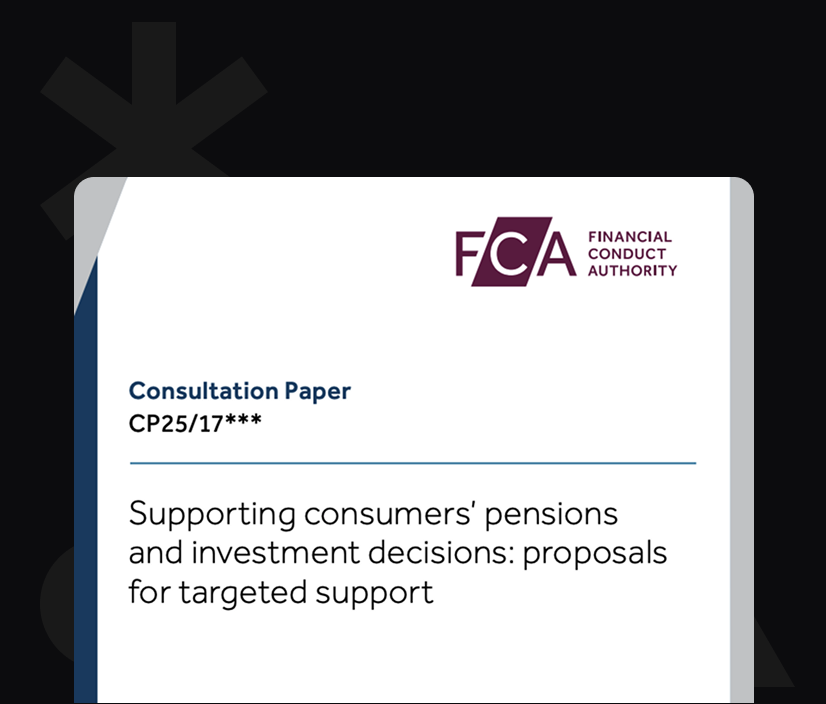
- Consultation Paper CP25/17 on supporting consumer investment decisions
- The 2025 Research Note Reading Between the Lines, which explored how consumers understand and act on financial documents
In both cases, the FCA used the framework to structure its evaluation of consumer understanding. Instead of asking “is this easy to read?”, the question became “can people recall, interpret, and apply this information in a way that supports good decisions?”. The question asked can adapt to the situation, and the aims of the document.
The framework sets a much higher bar, and a far more meaningful one.
Five levels of comprehension but one clear message
Amplifi breaks comprehension into distinct levels. These are very flexible, able to be adapted based on the aims of the communication being tested:
- Main message: Did the reader grasp the core point?
- Basic recall: Can they remember key facts?
- Inference: Can they join the dots and understand implications?
- Application: Can they use the information to make an informed decision?
- Reflection: Can they evaluate whether the information is relevant to them?
This structure matters because financial decisions rarely hinge on just identifying the facts. They rely on a chain of understanding. If any link in that chain breaks, the decision can be compromised, and the consumer is at greater risk of making a poor decision.
The FCA’s research showed exactly that.
When documents were simplified and structured with comprehension in mind, consumers didn’t just read faster, they understood more, remembered more, and made better choices.
That’s the kind of evidence firms have been waiting for.
Why this matters for the Consumer Duty
The Consumer Duty requires firms to ensure that communications “support and enable” customers to make informed decisions. But until now, firms have lacked a reliable way to measure whether that’s actually happening.
The Amplifi framework changes that.
1. It predicts real comprehension, not superficial readability
A document can score well on readability tests and still leave people confused. The FCA’s work makes this clear. Amplifi’s multi-level approach gives firms a way to test comprehension in a way that aligns with how the FCA itself is now thinking.
2. It provides a defensible, evidence-based method
Under the Duty, firms must demonstrate that their communications work as intended. Amplifi gives them a structured, research-backed way to do exactly that. It forms a core and trusted part of our clients’ testing and reporting programmes.
3. It highlights where communications fail, and how to fix them
Because the framework breaks comprehension into levels, it shows why consumers struggle. Is the main message unclear? Are people misinterpreting key details? Are they unable to apply the information to their own situation? This level of insight is a valuable diagnostic tool to allow firms to identify how and where to simplify their comms.
4. It aligns directly with the FCA’s own thinking
When the regulator uses a framework in its own research and consultation papers, firms should pay attention. It’s a strong signal of what ‘good’ looks like.
A step towards a more honest industry
One of the most striking themes we’ve explored in our recent blogs is the idea that comprehension is not a ‘nice to have’. In fact, it’s a fundamental part of fairness. The FCA’s adoption of the framework echoes that sentiment.
For years, firms have relied on assumptions about consumer understanding. The Consumer Duty has challenged those assumptions, but the Amplifi Framework gives firms a practical way to respond.
It encourages more intelligible writing, better structure, and more thoughtful communication design. More importantly, it helps firms see their documents through the eyes of real people, not compliance teams or limited readability tools.
What This Means for Firms Going Forward
If the FCA continues to use the Amplifi framework in its research and regulatory thinking, firms may find themselves under increasing pressure to adopt similar approaches. And honestly, that’s no bad thing.
Firms that embrace this shift early will:
- produce clearer, more effective customer communications
- reduce the risk of consumer misunderstanding
- strengthen their Consumer Duty evidence base
- build trust by genuinely supporting informed decision-making
In a landscape where regulatory expectations are rising, the ability to demonstrate true comprehension, not just readability, could become a competitive advantage.
Final Thoughts
The FCA’s use of the Amplifi Multi-Level Comprehension Framework marks a real turning point. It moves the evidence base from “is this readable?” to “does this help people make good decisions?” That’s a far more meaningful test, and one that aligns closely with both the spirit and letter of the Consumer Duty.
For firms, this is an opportunity. A chance to rethink how they communicate, to measure what really matters, and to build a more transparent relationship with customers.
If the industry takes this seriously, we may finally see financial communications that people can not only read, but truly understand.
Get involved! Read Sarah Sabbaghan’s It's time to rethink how we measure understanding blog to delve deeper.

Explore more articles