The Great Hesitation: Why Targeted Support may be Stuck on the Starting Blocks


We were recently part of a series of workshops as part of the Financial Regulation Innovation Lab (FRIL), an industry-led collaborative research and innovation programme, founded by Fintech Scotland in partnership with the University of Strathclyde and the University of Glasgow.
This gave us a deep insight into the thinking of a wide range of firms around the issues they see with proving Targeted Support, a new form of regulated advice sitting between bespoke personal advice and broad guidance.
We were lucky enough to win grant funding to deliver one of the use cases. But it also made us reflect on the new framework, and just why some firms appear reticent to dive in…
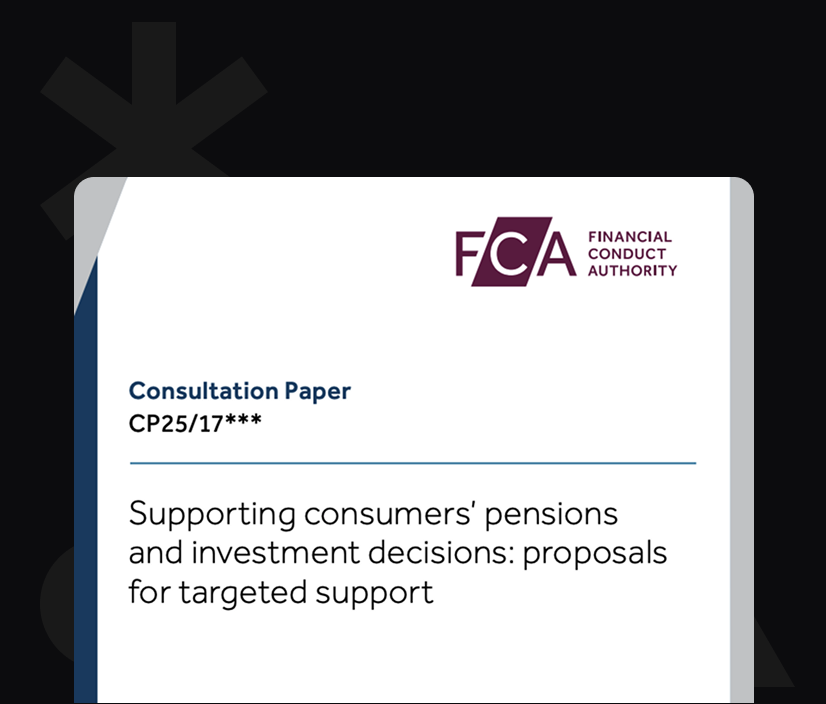
The FCA has been calling for a game-changing new form of communications from firms, designed to bridge the UK’s advice gap and encourage saving and investment from consumers.
Targeted support is a new framework designed to give millions of underserved consumers the support they need without the high price tag usually charged for full, individualised advice.
Yet, as we sit in early 2026, the engine is idling. While the FCA’s go-live in April 2026 rapidly approaches, the industry’s uptake has been more of a cautious crawl than a sprint. As of January, only 19 firms had applied through the PASS scheme to register their intention to provide Targeted Support.
It seemed like an excellent opportunity. Firms will be able to seek out new customers with a defined need, offering them highly focused advice, and generating new customers and fresh business.
So why the reticence?
Here is the breakdown of some of the hurdles we believe are keeping firms on the sidelines.
1. The Risk of Advice Creep
The regulatory ‘no-man's land’ between generic guidance and regulated advice remains a significant bogeyman for the industry.
Despite near-final rules published in late 2025, firms remain cautious of advice creep, where a helpful suggestion may be subsequently seen by the regulator as a personal recommendation. How much personal information can the firm go on to decide what particular level is suitable?
There is also the ‘FOS factor’. There is a lingering fear that if a targeted suggestion leads to a poor consumer outcome, the Financial Ombudsman Service (FOS) will apply the benefit of hindsight, leaving firms on the hook for redress. Until the FOS and FCA are visibly in lockstep, many firms are likely to play it safe.
2. When is Targeted Support actually Distance Marketing?
There has been a series of back-and-forth conversations between FCA and the Information Commissioner’s Office (ICO) to clarify how targeted support can be differentiated from distance marketing. Given that targeted support is supposed to enable firms to identify and contact non-customers with an issue they need support with, firms are understandably nervous of straying into GDPR enforcement territory.
Ironically, the disengaged populations that targeted support is meant to help are likely to be the hardest to reach legally without an explicit opt-in.
3. A Sceptical Public
We have a trust problem.
Consumers are notoriously wary of commercial nudges, often viewing them as sophisticated sales pitches rather than altruistic guidance. And often, unfortunately, they have been proved to be right.
Targeted support is designed to meet specific issues that a great many customers have. These include: having no access to any kind of genuine or regulated advice, as well as issues relating to financial planning such as underinvestment people keeping their money in poorly performing accounts, or either not saving enough for their pension or drawing a pension down too quickly.
These issues affect millions, and even impact on the economic performance of UK PLC: reducing investment in the stock market and reducing consumer wealth creation.
Targeted support was designed to help reach these people, and point them towards a better way to manage their finances.
Yet, when it comes to life-altering sums of money, the digital nudge may fail to cut through the noise. Many consumers still have a private mindset, and default to wanting human advice. This could leave targeted support in a vacuum of engagement.
4. Meeting the Consumer Duty
Despite the growing maturity of the Consumer Duty and its expectations around evidencing consumer understanding and good outcomes, firms are still lacking many tools they need. They rely to a large degree on ‘downstream’ signals, things like the volume of call centre enquiries they receive, complaints data, and customer drop-outs. Often these are signals that a customer has received a poor level of understanding, or a challenging outcome, i.e. when harm may already have occurred.
What industry needs is a way to measure the likelihood of good understanding in situ. This will both help firms to be confident consumers are properly informed and likely to make better decisions, but also protect firms against claims of miscommunicating, complaints and Consumer Duty non-compliance.
This is Where Amplifi Can Help
Our intelligibility assessment and simplification software is market-leading. It is the only assessment that confidently tells firms whether their communications are going to be understood, who might struggle, and (importantly) how to fix that. We’re the only regulation-grade assessment tool out there.
But we’re going further. We are testing in the FCA sandbox, and presented to the FRIL programme, a way to digitally layer communications, so they are better understood. And crucially, a firm is able to use this technique to get real time feedback on how well a customer has engaged with and understood what they’re being shown.
This will provide a step-change for consumer understanding and firm compliance: whether it’s used for targeted support, credit card agreements, investments or pensions. In fact it can apply any time complex information needs to be communicated and understood.
To talk to us about how this could be applied in your own business, contact us at https://amplified.global/contact.
Don’t remain on the sideline – communicate with clarity and confidence.

Explore more articles